AI study guide · Module 3. Tools
Lesson 1 of 5 in English
ChatGPT vs Gemini: differences and which is better
Gemini vs ChatGPT is one of the most searched AI comparisons, and the short answer is that neither is better at everything. Both are assistants built on a language model with tools around it. ChatGPT, from OpenAI, is an app you bring your work to, with the Work agent on every plan; Gemini, from Google, lives inside Gmail, Docs, Android and Chrome, and from today its Tasks agent is free in the US. The main paid plans cost about the same: $20 for ChatGPT Plus and $19.99 for Google AI Pro. Pick by where you work, and test both with your own tasks.
What is the difference between ChatGPT and Gemini?
ChatGPT and Gemini are the two most used AI assistants and, at the basic level, they do the same thing: you talk to them in writing or by voice, and they answer with text, tables, images or files. They search the web, read your documents and can do tasks for you. The main difference is not what they can do but where they live: ChatGPT is its own app that you bring your work to, and Gemini sits inside the Google services that billions of people already use every day.
- ChatGPT
- OpenAI’s assistant, launched on 30 November 2022. It runs on the GPT models (today, the GPT-6 family) and brings together chat, Work (an agent that does whole tasks) and Codex (coding).
- Gemini
- Google’s assistant, born in 2023 as Bard and called Gemini since 8 February 2024. “Gemini” is also the name of Google’s family of models, used by other products like Search and Gemini Notebook.
- Model and assistant
- The model is the “brain” that writes (GPT-6, Gemini 4 Argon); the assistant is the app that surrounds it with tools, memory and settings. You can compare either level, and they are not the same thing.
Inside, both work the same way. The part that writes is a large language model that predicts text piece by piece, tuned with human feedback to behave as an assistant, and around it there are tools: web search, file reading, image generation, memory and agents. Both also make mistakes the same way: they write the most likely text, not checked text.
What changes is the product. ChatGPT runs on the web, on your phone and in a desktop app for Mac and Windows, and you bring it files, connect services or ask it to search. Gemini also has its own app (web, phone, Mac and Windows), but it also shows up inside Gmail, Docs, Drive, the Chrome browser and Android phones, where it has replaced Google Assistant. If you live in Google, Gemini is already where you work; if you do not, ChatGPT asks less of you.
Both are huge. In February 2026, OpenAI said ChatGPT had 900 million weekly users; in August 2026, Google said the Gemini app had passed a billion monthly users. They do not measure the same thing (week versus month), so both companies can say theirs is the most used.
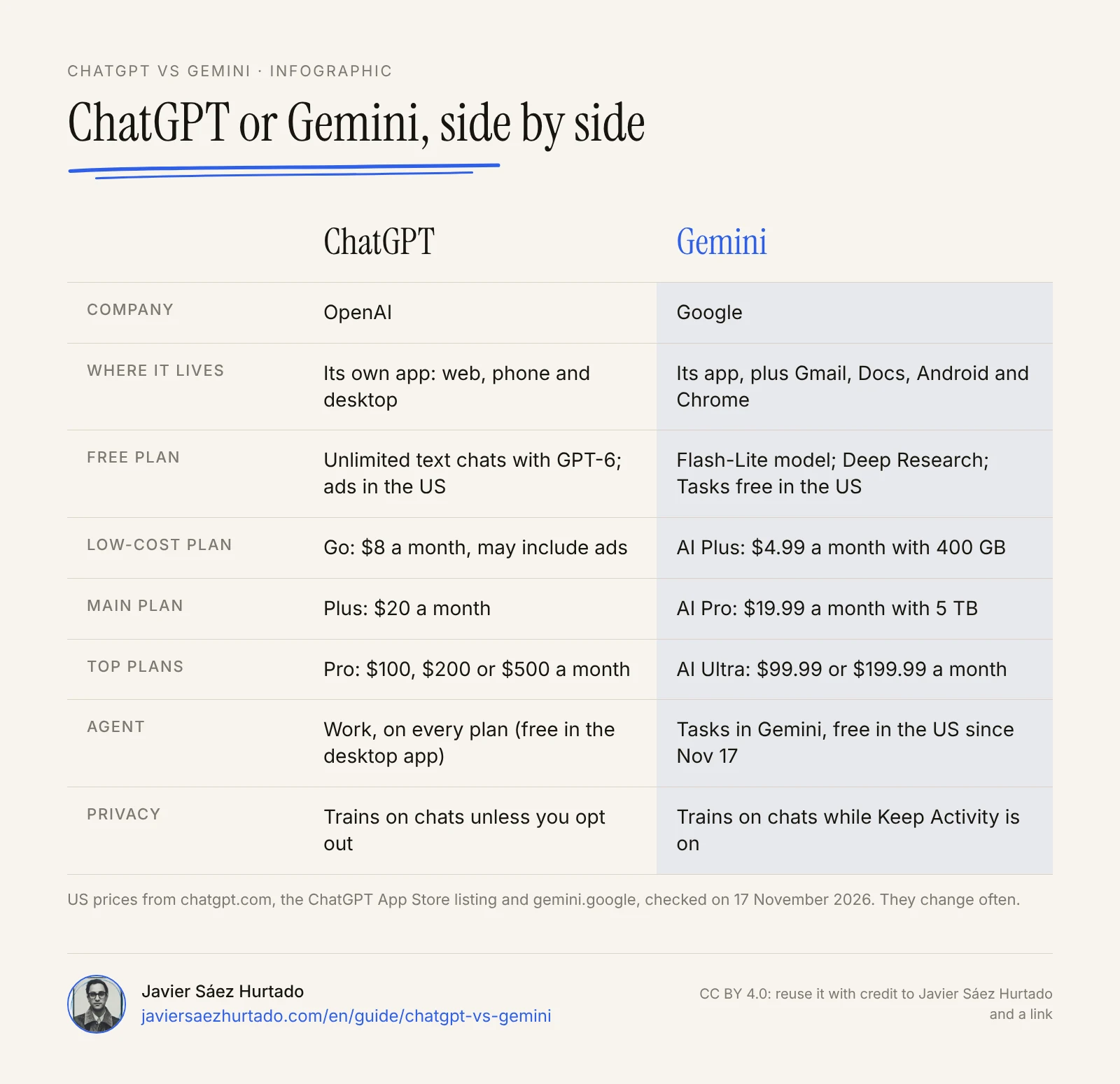
ChatGPT vs Gemini at a glance
This is the side-by-side comparison, with data from the official OpenAI and Google pages checked from the US on 17 November 2026. It changes often: on the very day I checked, Google made its Tasks agent free in the US.
ChatGPT and Gemini, row by row
Official data checked from the US on 17 November 2026
| Feature | ChatGPT | Gemini |
|---|---|---|
| Company | OpenAI | |
| Since | 30 November 2022 | 2023 as Bard; Gemini since February 2024 |
| Users | 900 million a week (February 2026) | Over a billion a month (August 2026) |
| Models | Free: GPT-6. Paid: GPT-6 reasoning and, in Work and Codex, GPT-6.2 | Free: Flash-Lite. Paid: Gemini 4 Hydrogen, Argon and Carbon |
| Where it works | Web, phone and desktop app (Mac and Windows) | Web, phone, Mac and Windows, and inside Gmail, Docs, Drive, Chrome and Android |
| Free plan | Unlimited text chats; ads in the US | Flash-Lite, Deep Research, skills and Tasks in Gemini |
| Low-cost plan | Go: $8 a month; may include ads | Google AI Plus: $4.99 a month, with 400 GB of storage |
| Main plan | Plus: $20 a month | Google AI Pro: $19.99 a month, with 5 TB of storage |
| Top plans | Pro: $100, $200 or $500 a month | Google AI Ultra: $99.99 or $199.99 a month |
| Agent that works for you | Work, in the desktop app on every plan (web and phone too on Plus and Pro) | Tasks in Gemini, free in the US since 17 November 2026 |
| Images and video | Creates and edits images | Creates and edits images; video on paid plans |
| Trains on your chats | Yes, unless you turn off “Improve the model for everyone” | Yes, while Gemini History (Keep Activity) is on |
| Chat with no history | Temporary chat: deleted after 30 days | Temporary chat: kept for about two months, not used for training |
Which is better, ChatGPT or Gemini?
Neither is better at everything, and anyone who says otherwise is usually comparing one test or one month. For what most people do (an email, a summary, an explanation, an idea for a presentation), both do well at a similar level. The differences show up at the edges: very long tasks, huge documents, complex coding or work with your own services.
There are three reasons to distrust any overall winner:
- The models change almost every month. OpenAI started releasing the GPT-6 family on 3 September 2026 and GPT-6.2 on 17 November; Google brought Gemini 4 Argon to its app on 13 October and Gemini 4 Hydrogen on 12 November. A comparison from the spring describes other models.
- Each company publishes its own tests. In Google’s table, Argon comes first or tied in most tests against GPT-6 Astra and Claude, but behind OpenAI’s model at computer use.
- Each plan gives you a different model. Free Gemini today is Flash-Lite, not the model that wins those tests, just as free ChatGPT is not GPT-6.2 Astra. Comparing one’s free plan with the other’s paid plan tells you nothing.
What does change in a stable way is the product: where each one lives, what each plan includes, which agents you can use and what each company does with your data. That is what the rest of this lesson covers. And the best benchmark is yours: below I explain how to run it in one afternoon.
Which is better for free?
It depends on what matters most to you, because the two free plans now go in different directions: ChatGPT gives you a stronger model, but with ads; Gemini gives you a lighter model, but no ads in the app, plus Deep Research and, since today, a free agent.
ChatGPT for free. Unlimited text chats with GPT-6 (with guardrails against abuse) and limited use of uploads, image creation, voice, deep research, memory, Codex and Work, the last one only in the desktop app. In exchange, ChatGPT has shown ads on its Free and Go plans in the US since 9 February 2026. I explain how they work in ChatGPT ads.
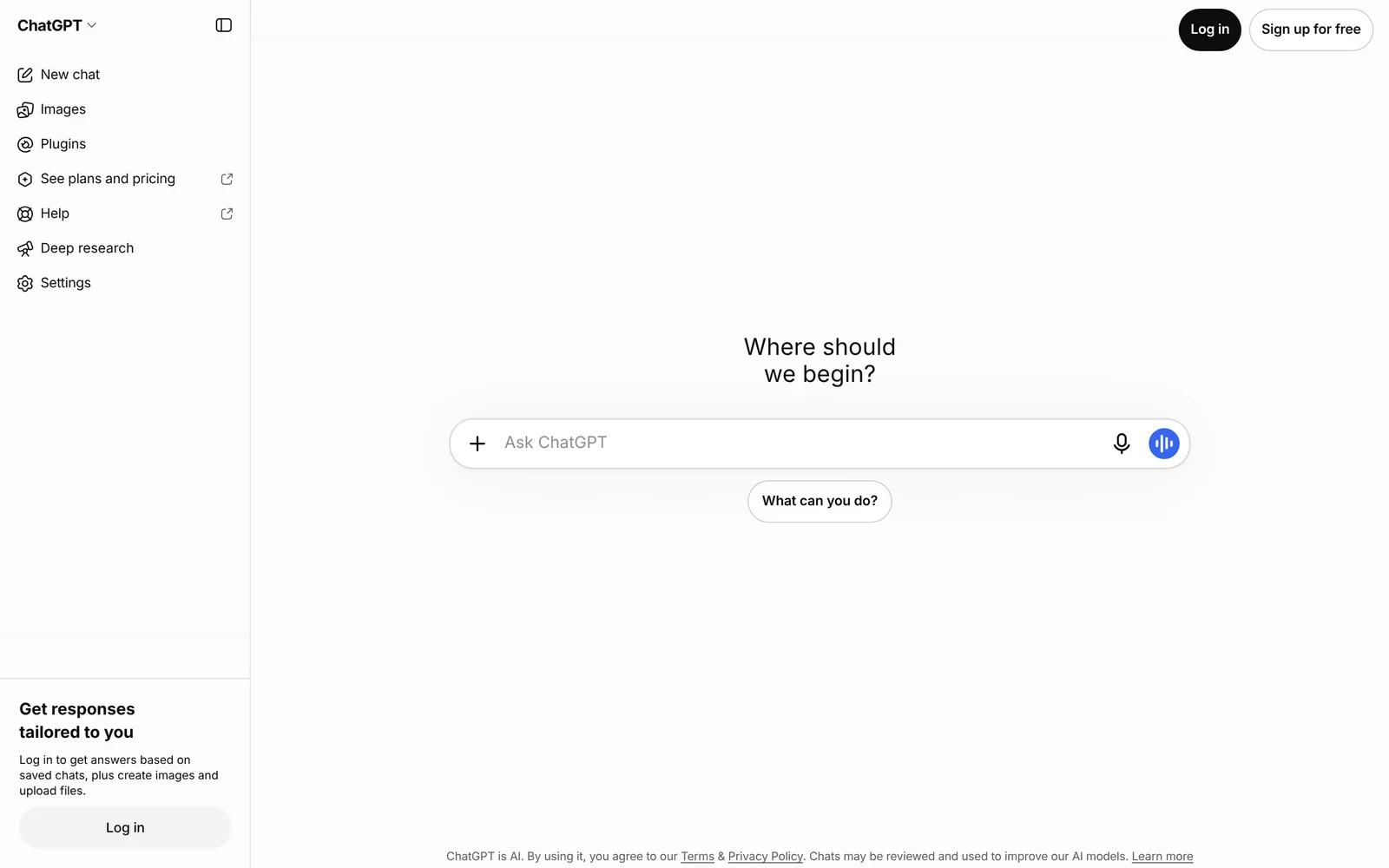
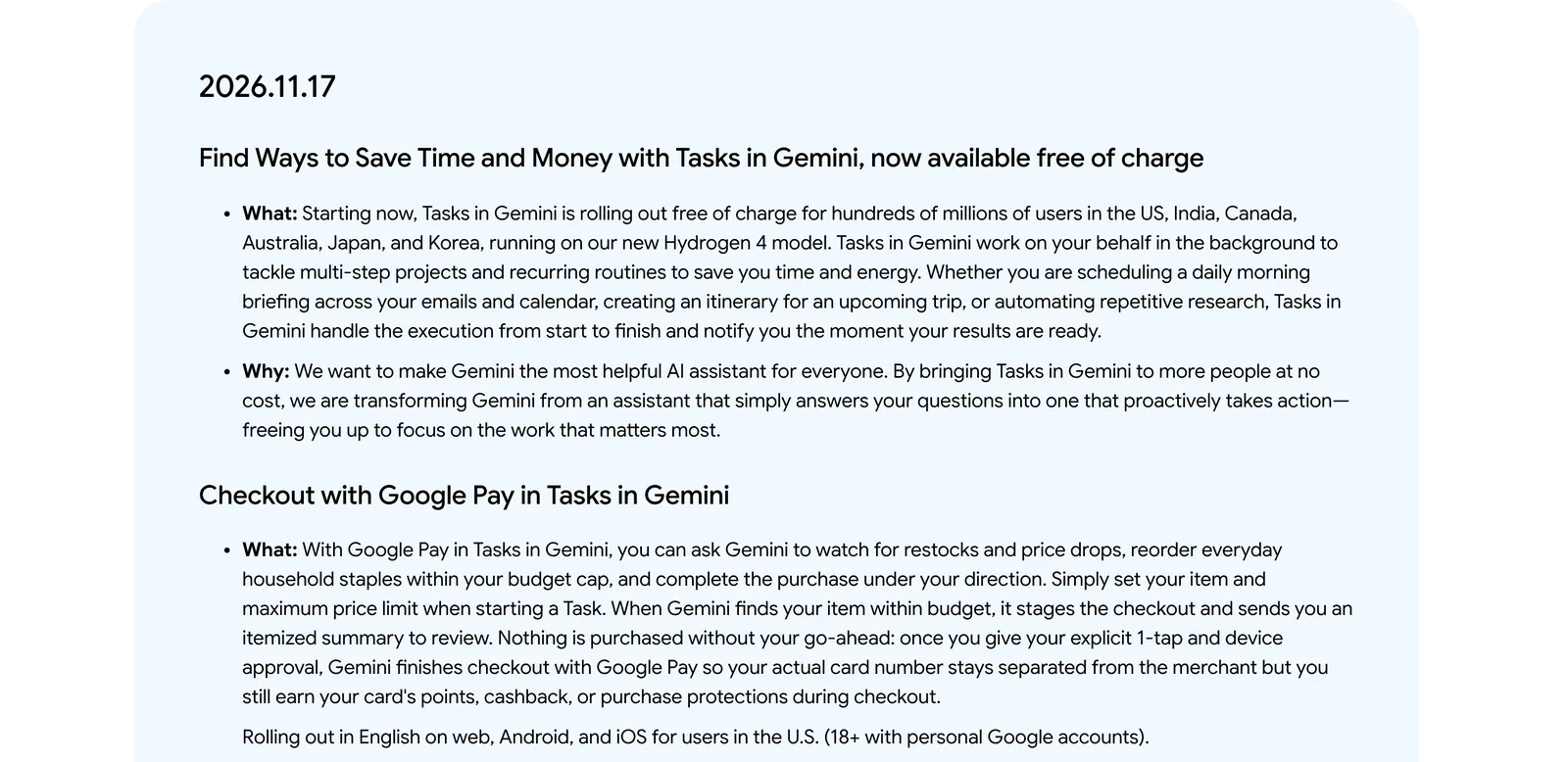
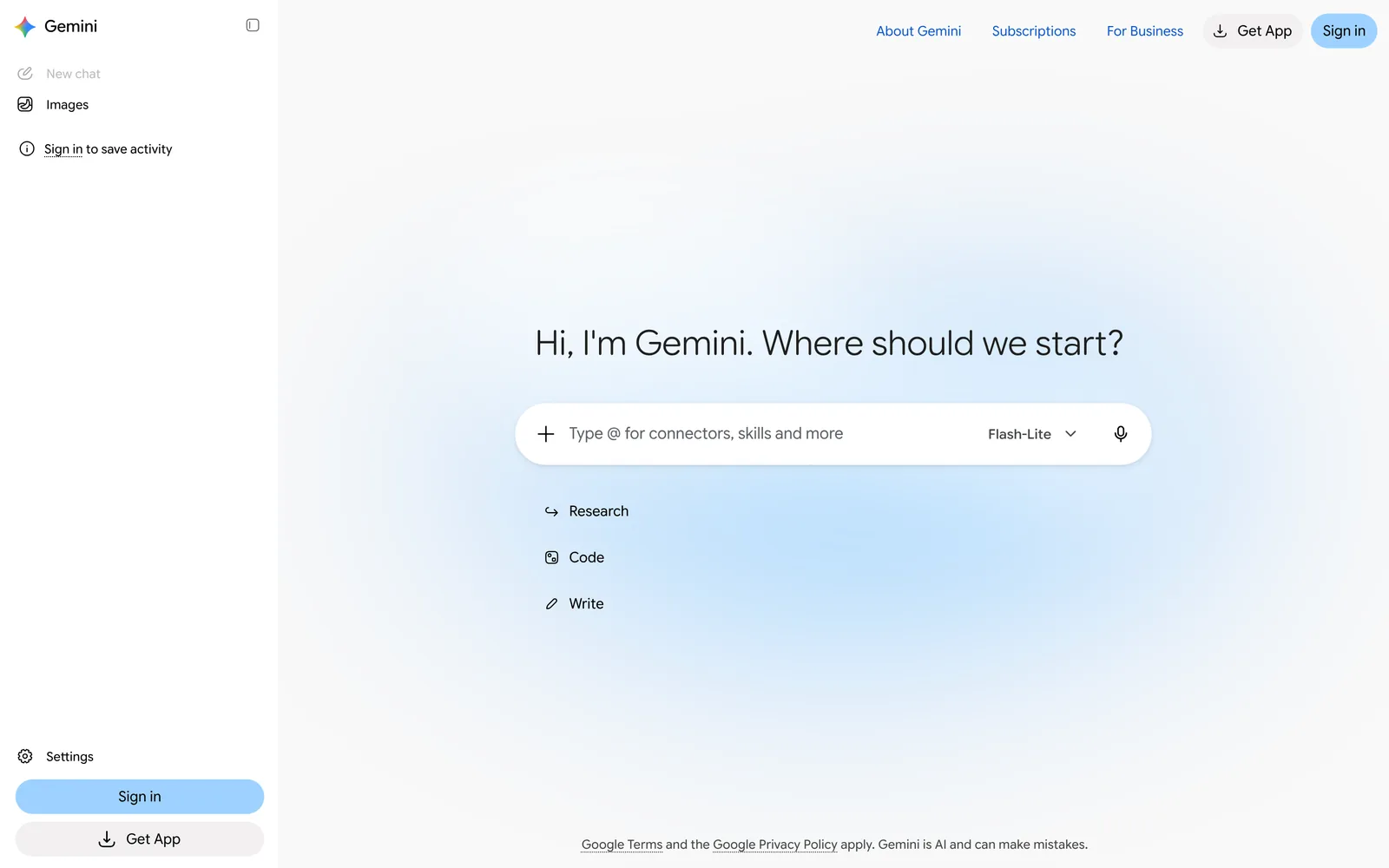
Gemini for free. The Google AI plans page lists, for $0: the Flash-Lite model, image generation and editing, Deep Research, Gemini Live, Canvas, skills, Gemini Notebook and 15 GB of storage. The stronger models (Flash, Pro and Gemini 4) moved to paid plans in October. And on 17 November Google started rolling out Tasks in Gemini free of charge in the US, India, Canada, Australia, Japan and Korea: an agent that works in the background on multi-step projects and routines (a morning briefing from your email and calendar, a trip itinerary, repeated research) and tells you when it is done.
In practice:
- If you write a lot of text and ads do not bother you, free ChatGPT gives you a stronger model and more room.
- If you do not want ads, or you already use Gmail and Calendar, start with Gemini, and try Tasks for something you repeat every week.
- If you study from your own notes, Google’s most useful free tool is not Gemini but Gemini Notebook (formerly NotebookLM), which answers from your documents and cites each point.
ChatGPT Plus vs Google AI Pro: prices and plans in the US
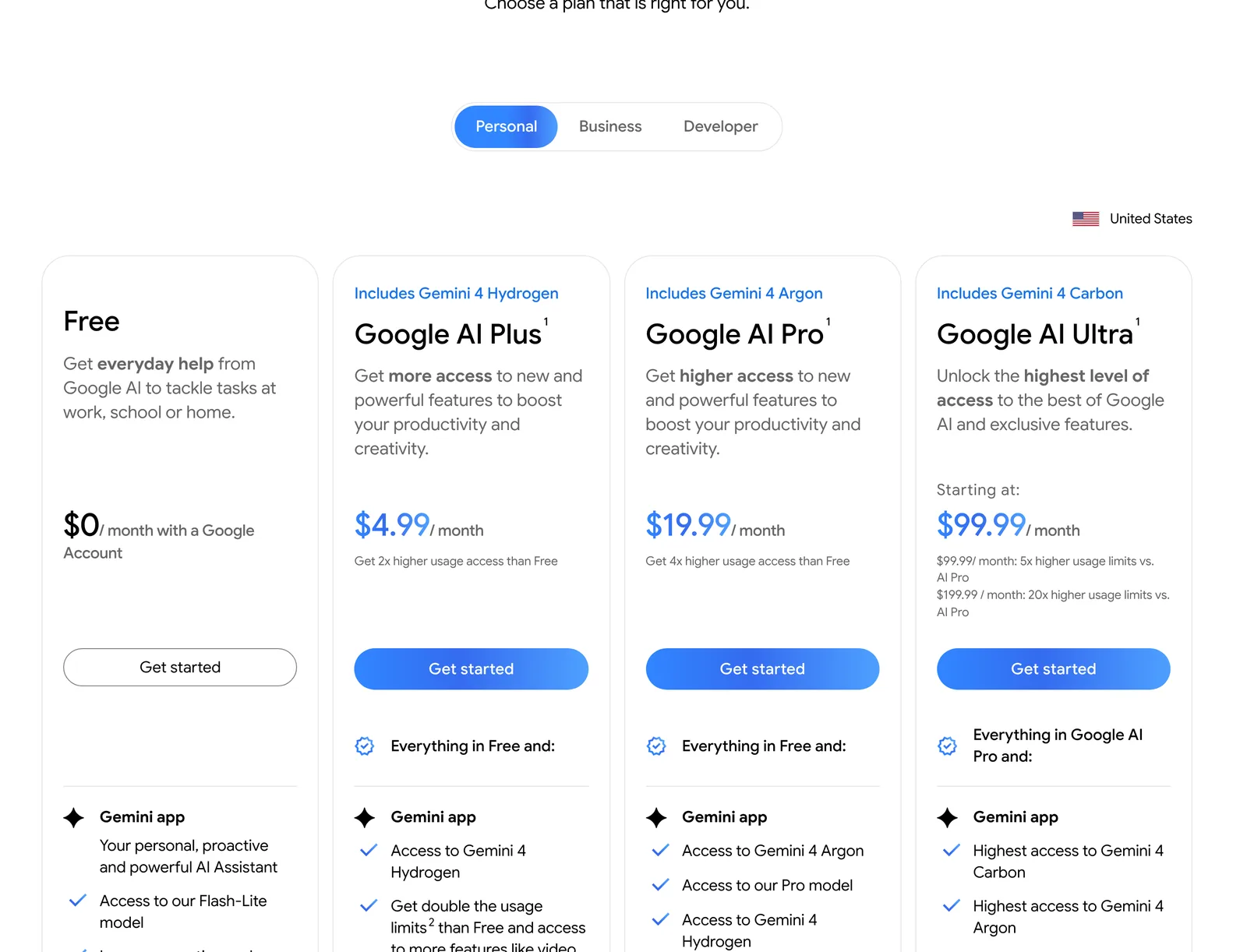
The main paid plans cost almost the same: $20 a month for ChatGPT Plus and $19.99 for Google AI Pro. The difference is in what comes with each one.
| Plan | ChatGPT | Gemini (Google AI) |
|---|---|---|
| Free | $0; GPT-6; ads in the US | $0; Flash-Lite, Deep Research and Tasks; 15 GB |
| Low cost | Go, $8 a month; may include ads | AI Plus, $4.99 a month: Gemini 4 Hydrogen, 2x the free usage and 400 GB |
| Main | Plus, $20 a month: GPT-6 reasoning, more room in Work and Codex; no ads | AI Pro, $19.99 a month: Gemini 4 Argon and the Pro model, 4x the free usage, Gemini in Gmail and Docs, Chrome auto browse, 5 TB |
| Top | Pro, $100, $200 or $500 a month: GPT-6 Astra Pro reasoning, Dot | AI Ultra, $99.99 (5x AI Pro usage) or $199.99 (20x): Gemini 4 Carbon, from 20 TB |
ChatGPT prices from the ChatGPT listing on the US App Store (Plus is $19.99 there and $20 on the web); Google AI prices from gemini.google/us/subscriptions, both on 17 November 2026.
Which is better, ChatGPT Plus or Google AI Pro? If you already pay Google for storage for your photos and files, AI Pro usually pays for itself: 5 TB is included, along with Gemini in Gmail and Docs and extras like YouTube Premium Lite. If you want one app that holds your work from many services (Outlook, Notion, Slack), Plus is the better hub. And if you code, both have a tool: Codex in ChatGPT, and Antigravity, which is built into the Gemini app for Mac and has its own limits on AI Pro. One detail on limits: Google says Gemini app usage refreshes every five hours until you reach a weekly limit, like Claude.
What each one is best for
To choose, think about where you work and which tasks you repeat. These are the cases where one of the two usually fits better:
- Email, documents and an Android phone. If your day runs through Gmail, Drive, Docs and Android, Gemini is already there: it summarizes a long thread inside Gmail, drafts in Docs or answers by voice on your phone, with no copy and paste. Paid plans are where this shows most.
- One app for all your work. If you use services from several companies, ChatGPT works as the hub: attach files, connect services and keep everything in one history and in projects.
- Long tasks done for you. ChatGPT Work produces finished deliverables (a deck, a spreadsheet) from your files and apps, in the desktop app on every plan and also on web and mobile on Plus and Pro. Tasks in Gemini, now free in the US, runs in the background and can even make purchases with Google Pay under a price cap you set, only after your explicit approval. Before you hand off anything, decide what the agent may never do without you.
- Research with sources. Both have deep research: they search and read dozens of pages and return a report with citations. In Gemini it is included in the free plan. In both, open the sources: sometimes they summarize badly.
- Images and video. Both create and edit images from a description. Gemini also generates video on its paid plans.
- Coding. ChatGPT has Codex, its coding agent; Google has Antigravity, now inside its Mac app.
- Maximum privacy. Neither: if a text cannot leave your computer, the option is a local model, which is less capable.
If you are also weighing Claude, I compare it in Claude vs ChatGPT. And both apps now support skills, the reusable instructions I explain in Claude Skills.
Try it yourself: three tasks to compare them
The comparison that matters most is the one you run with your own tasks. Here is an example. Maria runs the office of a small language school and wanted to decide whether to pay for one of the two. Instead of reading more rankings, she ran this test in one afternoon, on the free plans and in new chats.
The rules. The same text in both, word for word. Both on the same plan level (free with free, or paid with paid). A new, temporary chat in each, so what they remember about you does not affect the answer. And no personal data: nothing about students or families.
Task 1, writing. “Write an email to our students’ families saying that from December, Thursday classes move to Tuesday, at the same time. Friendly tone, under 120 words, and end with who to contact if there is a problem.”
Task 2, summarizing a document. Maria attached a public PDF, the rules of a state grant program, and wrote: “Summarize the requirements and deadlines in a table, and say which page of the document each fact is on.”
Task 3, a current fact with a source. “What is the current deadline to apply for this grant? Search the web and give me the link to the official source.”
Then she scored each answer with this template, 0 to 2 points per item:
| Item | What you check | Points |
|---|---|---|
| Accuracy | Every fact matches the source when you check it | 0 to 2 |
| Sources | It links or cites the right source, not a similar one | 0 to 2 |
| Format | It does what you asked: length, table, tone | 0 to 2 |
| Corrections | How many messages it takes to get it right | 0 to 2 |
| Fit | You can use it where you work without copy and paste | 0 to 2 |
Do not expect a clear winner on all three tasks: usually one writes the email more to your taste and the other summarizes better, and the real difference shows up when you check the facts. The last item decided it for Maria: the school uses Gmail and Drive, so she kept Gemini for day-to-day work and kept using ChatGPT for free to double-check what matters. With another way of working, the answer would have been different, which is why it is worth running your own test.
Repeat the test when something big changes (a new model, a plan change): at the speed they move, today’s conclusion may not hold in six months.
Which is safer? Privacy and your data
Both can be used safely if you know what they keep and you set them up. Both keep your chats, and both can use them to train their models unless you change something. What changes is the names of the settings and how long data is kept:
| Topic | ChatGPT | Gemini |
|---|---|---|
| The key setting | “Improve the model for everyone”, in Settings, Data controls | Gemini History (also called Keep Activity) |
| How long chats are kept | Until you delete the chat | 18 months by default (you can pick 3, 36 or no limit) |
| No history | Temporary chat: deleted after 30 days | Temporary chat or History off: kept for about two months, not used for training |
| Human review | Authorized staff and vendors may read some chats | Reviewers read some chats; reviewed chats are kept up to three years, even if you delete your history |
| Work accounts | Business and Enterprise: no training by default | Google Workspace: no training or review without permission |
Two details worth knowing. In Gemini, Google says some chats are read by human reviewers to improve the service, disconnected from your account, and those are kept for up to three years even if you delete your activity; that is why its privacy notice asks you not to enter confidential information. And if you connect Gemini to Gmail or other apps, deleting your Gemini activity does not delete what was already shared with those apps.
In ChatGPT, the practical risk is the opposite: what you write stays in your history until you delete it, and memory can carry details from one chat to the next. Check both settings before you start.
On minors: ChatGPT requires users to be 13, with a parent’s permission until 18. Gemini can be turned on for children through a supervised account with Family Link, and the Google AI plans and Gemini in Gmail and Docs are 18+ only.
Common mistakes when choosing between ChatGPT and Gemini
- Choosing by a benchmark table. Each company publishes its own, they measure narrow things and they change with every model. Your own test says more.
- Comparing different plans. Free Gemini against paid ChatGPT, or the other way around. Always compare the same level.
- Forgetting where you already work. An assistant that is inside your email and documents saves more time than a slightly better one you have to copy and paste into.
- Paying for both just in case. For almost everyone, one paid plan is enough, plus the other one free to double-check.
- Letting an agent pay or send without a limit. Tasks in Gemini and ChatGPT Work can act for you. Set a cap, review before anything goes out and start with small tasks.
- Pasting work data into a personal account. If your company has Workspace or ChatGPT Business, use that.
My take
I use both, for different things, and I would not choose by this month’s rankings. I would choose by what changes less: where my work lives, what each plan includes and what each company does with my data.
If my day ran through Gmail, Calendar and an Android phone, I would start with Gemini, especially now that its agent is free in the US: I would try Tasks first with something low risk, like a weekly briefing, before letting it touch money. If I worked across many services and wanted one place for everything, with a stronger free model, I would start with ChatGPT. In both cases I would check the privacy setting on day one and keep anything confidential out of a personal account.
Disclosure: Convexify, the firm I founded, is part of the OpenAI Select Partner program, and I prepare this guide with the help of AI tools, including ChatGPT and Gemini. This comparison comes from OpenAI’s and Google’s public pages and the linked sources, and I review it when their plans change.
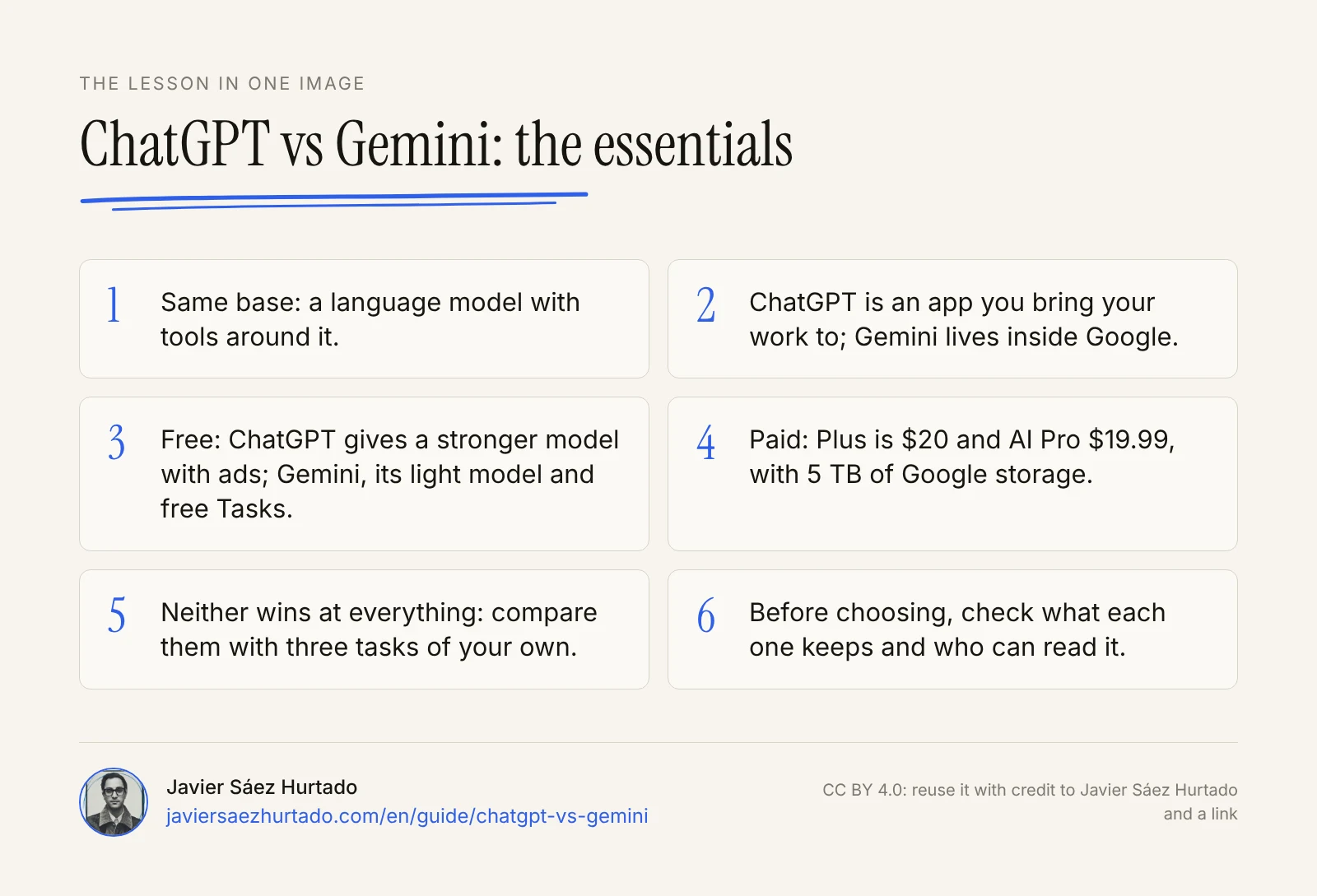
The lesson in one image
FAQ
Which is better, ChatGPT or Gemini?
Neither is better at everything. For an email, a summary or an explanation, both do well. Gemini fits better if you work in Gmail, Docs, Drive and Android, and its free plan now includes the Tasks agent in the US. ChatGPT fits better if you want one app that holds all your work, with a stronger model on the free plan. The most reliable test is to try both with three tasks of your own.
Which is better, ChatGPT Plus or Google AI Pro?
They cost almost the same in the US: $20 a month for ChatGPT Plus and $19.99 for Google AI Pro (17 November 2026). AI Pro also includes 5 TB of Google storage, Gemini in Gmail and Docs, Gemini 4 Argon and Chrome auto browse. Plus gives the GPT-6 reasoning models, more room in Work and Codex and an app with no ads. If you already pay for Google storage, AI Pro usually pays for itself.
Is Gemini free?
Yes. With a Google account you can use the Gemini app for free, with the Flash-Lite model, image generation, Deep Research, Gemini Live, Canvas and skills. From 17 November 2026, Tasks in Gemini, its agent that works in the background, is also free in the US. The stronger models (Gemini 4 Hydrogen, Argon and Carbon) are in Google AI Plus ($4.99), Pro ($19.99) and Ultra (from $99.99).
Is ChatGPT free?
Yes. ChatGPT Free gives unlimited text chats with GPT-6 (with guardrails against abuse) and limited uploads, images, voice, deep research, Codex and Work in the desktop app. In the US, the Free and Go plans show ads. Plus ($20 a month) and Pro have no ads.
What AI is better than ChatGPT?
It depends on the task. Gemini is the most used alternative and fits best with Google services; Claude, from Anthropic, is widely used for coding and writing; Copilot, from Microsoft, fits with Word, Excel and Outlook. None beats ChatGPT at everything, and rankings change with every new model. Try two or three with the same tasks before you pay.
Are Gemini and Bard the same?
Yes. Google launched its assistant as Bard in 2023 and renamed it Gemini on 8 February 2024, the same name as its family of models. That is why “Gemini” is both the app and the models used by other Google products, like AI Mode in Search or Gemini Notebook.
Can I use ChatGPT and Gemini at the same time?
Yes, and it is a good idea while you decide: both have a free plan. Give both the same task and compare. In the long run, the practical choice is to pay for one (if you pay at all) and use the other for free to double-check important answers.
Sources
- OpenAI, Introducing ChatGPT (30 Nov 2022)
- ChatGPT, Pricing (checked from the US on 17 Nov 2026)
- Apple App Store (US), ChatGPT: in-app purchases (checked on 17 Nov 2026)
- OpenAI Help Center, Data controls FAQ
- TechCrunch, ChatGPT reaches 900M weekly active users (27 Feb 2026)
- Google, Bard becomes Gemini (8 Feb 2024)
- Google, Gemini app hits 1 billion monthly active users (11 Aug 2026)
- Google, Gemini 4 Argon is now available in the Gemini app (13 Oct 2026)
- Google, Google AI plans in the United States (checked on 17 Nov 2026)
- Gemini, app release notes (17 Nov 2026: Tasks in Gemini free of charge)
- Gemini Apps Help, Gemini Apps Privacy Hub (checked on 17 Nov 2026)
- 9to5Google, Gemini app limiting what models free and AI Plus users can access (3 Oct 2026)